Seeking Quantum Advantage:
2025 Workshop and Conference
The SEEQA2025 event was be held at Merton and
Corpus Christi Colleges, Oxford, August 25 – 29, 2025.
Following the original 2024 event, this was a one week residential conference in two of Oxford’s historic colleges that are located very conveniently next to each other. Experts gathered to debate the challenges and opportunities in the worldwide effort to achieve general Quantum Advantage.
Please find here the webpage of our original SEEQA 2024 event.
Schedule and Talk Titles
Click here to open or close the detailed schedule
- Johannes Bausch: Machine Learning for Fault-Tolerant Quantum Computation
- Michael Beverland: Tour de gross: A modular quantum computer based on bivariate bicycle codes
- Ben Criger: Fault-Tolerant Quantum Computing at
- Quantinuum
- Jens Eisert: Seeking a robust and practical quantum advantage
- András Gilyén: A distillation-teleportation protocol for fault-tolerant QRAM
- Alysson Gold: Scalable Superconducting Hardware for Quantum Advantage & Fault Tolerance
- Johnnie Gray: Four directions in tensor network simulations
- Matt McEwen: Operating surface codes below the threshold
- Bettina Heim: Defining the quantum-accelerated supercomputer
- Naomi Nickerson: Are LDPC codes a red herring?
- Chris Pattison: Application-optimized quantum fault-tolerance
- Shruti Puri: Taming Coherent Noise with Teleportation
- Nicholas Rubin: Quantum simulation with sum-of-squares spectral amplification
- Raul Santos: Improving the efficiency of time
- dynamics simulations
- Thomas Schuster: The classical complexity of quantum experiments
- Kunal Sharma: Toward Quantum Advantage for Ground State Problems
- Nathan Wiebe:
- Hayata Yamasaki: Energy-Consumption Advantage of Quantum Computation
- Elica Kyoseva:
- Samson Wang: Quantum Computational Complexity of Matrix Functions
Key Themes and Topics
- Recent improvements in quantum algorithms
- New application areas for quantum computers
- Advances in classical simulation and emulation
- Recent hardware improvements
- Improvements in practical quantum error correction and recent demonstrations
- Emerging ideas for fault tolerance
- Interplay between AI and quantum computing

Talks and Perspectives
As increasingly large investments are made into commercial quantum computing efforts, how should we view the prospects for the field: Can over-hype be avoided to keep goals attainable?
Poster Session and OQC Poster Prize
Two poster sessions were be held in the afternoon/evening of Wednesday 26th Aug.
Oxford Quantum Circuits (OQC) generously offered to create a Poster Prize of £500 to award the most outstanding young researcher’s poster. All students (undergraduate and postgraduate) and early career researchers within 4 years since completion of their doctorate were eligible to nominate themselves for this prize.
Congratulations to our OQC ECR poster prize winner Aliki Anna Capatos who presented the poster titled: Practical blueprint for low-depth photonic quantum computing with quantum dots.
Honourable mention was Ryan Tiew‘s poster titled: Low-Overhead Entangling Gates from Generalised Dehn Twists.
Oxford Union Debate
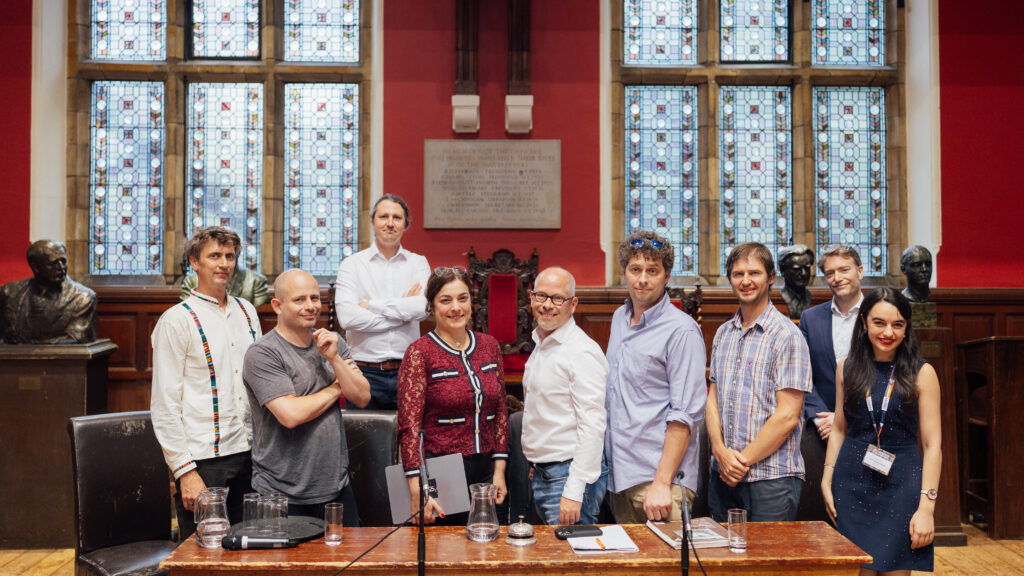
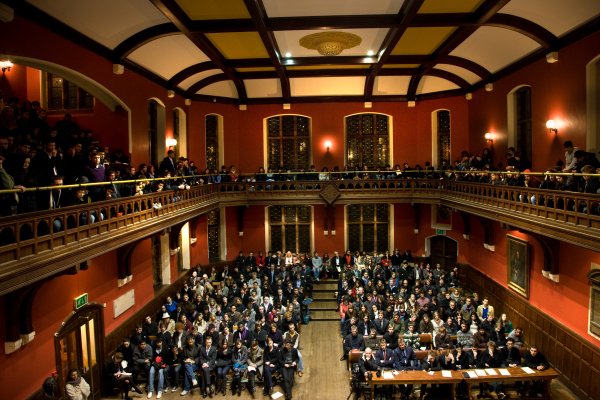
Participants attended an event in the evening of Thursday the 28th August: a debate session in the Oxford Union. Our panelists argued for and against the following motion:
This house believes that quantum computers will have a greater impact on our lives than conventional ones
Team A argued for: Elham Kashefi, Terry Rudolph, Nathan Wiebe
Team B argued against: Graeme Smith, Victor V. Albert, Jens Eisert
Result: Motion Defeated
Ayes: 72
Noes: 94
The Oxford Union is prestigious debating society located in the heart of Oxford – please see their introduction titled Celebrating 200 years of free speech.
Committees
Programme Committee
- Ryan Babbush
- Dominic Berry
- Harry Buhrman
- Michael Beverland
- Earl Campbell
- Sophia Economou
- Artur Ekert
- Keisuke Fujii
- Aram Harrow
- Zoe Holmes
- Elham Kashefi
- Elica Kyoseva
- Ashley Montanaro
- John Morton
Steering Committee
- Dan Browne
- Zhenyu Cai
- Noah Linden
- Armands Strikis
Speakers, Panelists and Tutorial Sessions
Speakers
- Johannes Bausch
- Michael Beverland
- Ben Criger
- Jens Eisert
- András Gilyén
- Alysson Gold
- Johnnie Gray
- Elica Kyoseva
- Matt McEwen
- Bettina Heim
- Naomi Nickerson
- Chris Pattison
- Shruti Puri (tbc)
- Nicholas Rubin
- Raul Santos
- Thomas Schuster
- Kunal Sharma
- Samson Wang
- Nathan Wiebe
- Hayata Yamasaki
Oxford Union Debate Panelists
- Victor V. Albert
- Jens Eisert
- Elham Kashefi
- Terry Rudolph
- Graeme Smith
- Nathan Wiebe
Tutorial Sessions
- Prakash Muarali: Cost Models and Architectures for Early Fault-Tolerant Algorithms
- Nicholas Rubin: Quantum Chemistry on Fault-Tolerant Quantum Computers
- Norbert Schuch: Tensor Network Simulation
- Victor V. Albert: Quantum Error Correction
Registration
Thanks to the generous support of our sponsors we were able to set very reasonable registration fees.
Financial Support
We had a limited capacity to provide financial help with conference costs for a small number of attendees. Participants who required financial help in order to be able to attend, were able to fill an online form – participants were be asked for a justification, those with strong and specific reasons were supported were possible.
Things to do in Oxford
Punting
We’ve arranged for punts for all conference participants and scheduled a punting for Thursday afternoon (please see conference schedule).
Where to eat
Tim Chan is an Oxford-based DPhil student and `food enthusiast’. He kindly prepared THIS collection of recommended places where participants can find delicious meals outside of the main conference venue.
Listen, Present and Discuss
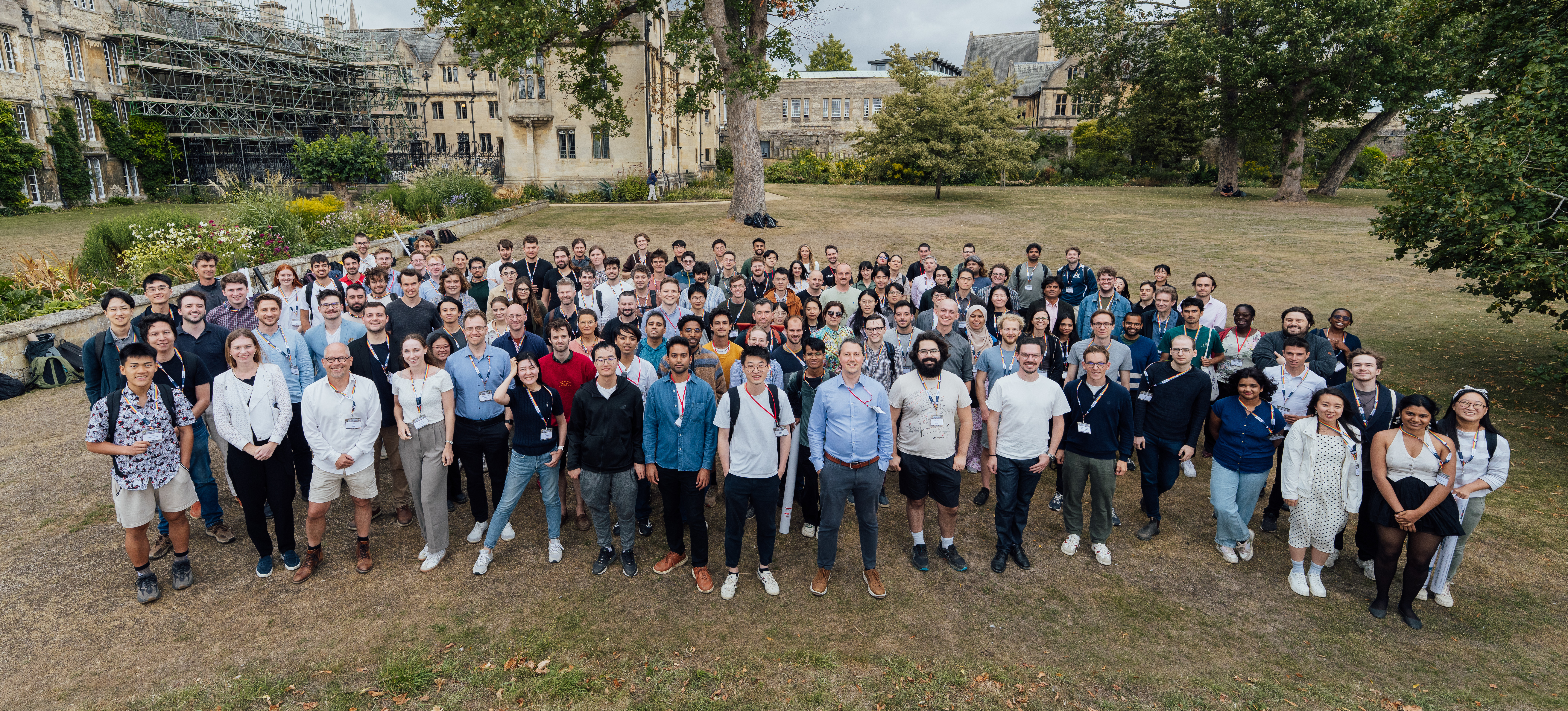
Lectures and presentations from world-leading experts. 150 participants, 10 invited long talks and 14 shorter talks. The first day of the conference (25th Aug) will be dedicated to 4 Tutorial Sessions. Two poster sessions where participants can present their work (interest in presenting a poster can be indicated at registration).
Tackle challenges together
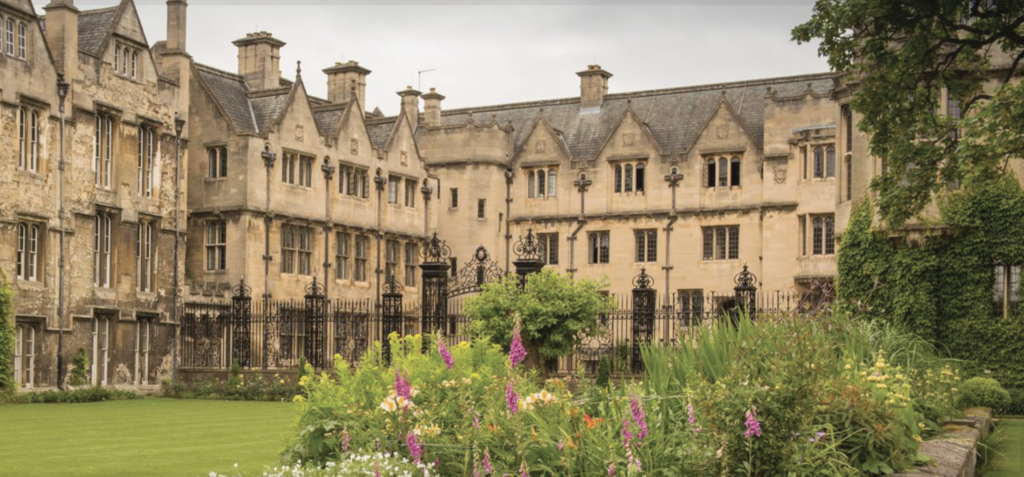
Merton College offers plenty of space in its scenic gardens and traditional seminar rooms for chats and meetings at all scales.
The latest theory and experiments
The event emphasises practical theory, while covering the most exciting experimental progress in various systems.
Evening debate
The event will feature an evening debate that tackles key controversy with speakers for and against. The venue will be the famous Oxford Union Debating Chamber
Residential in Merton College
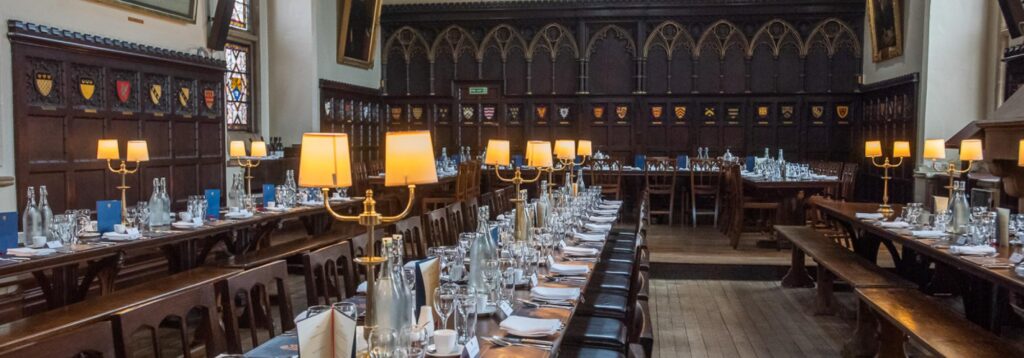
Attendees will stay at Merton and Corpus Christi Colleges, two of Oxford’s most beautiful colleges, with breakfast and dinner in Merton’s beautiful Hall.
Explore the Dreaming Spires
Beautiful walks, punting on the river, and countless historic colleges, museums and libraries.